
Lucky Imaging with AstraLux Sur
Click here to switch to the AstraLux Norte webpages
What is Lucky Imaging? Image distortions due to atmospheric seeing are not static. The degree of image degradation varies over a wide range on timescales of seconds. Exploit this fact and: |
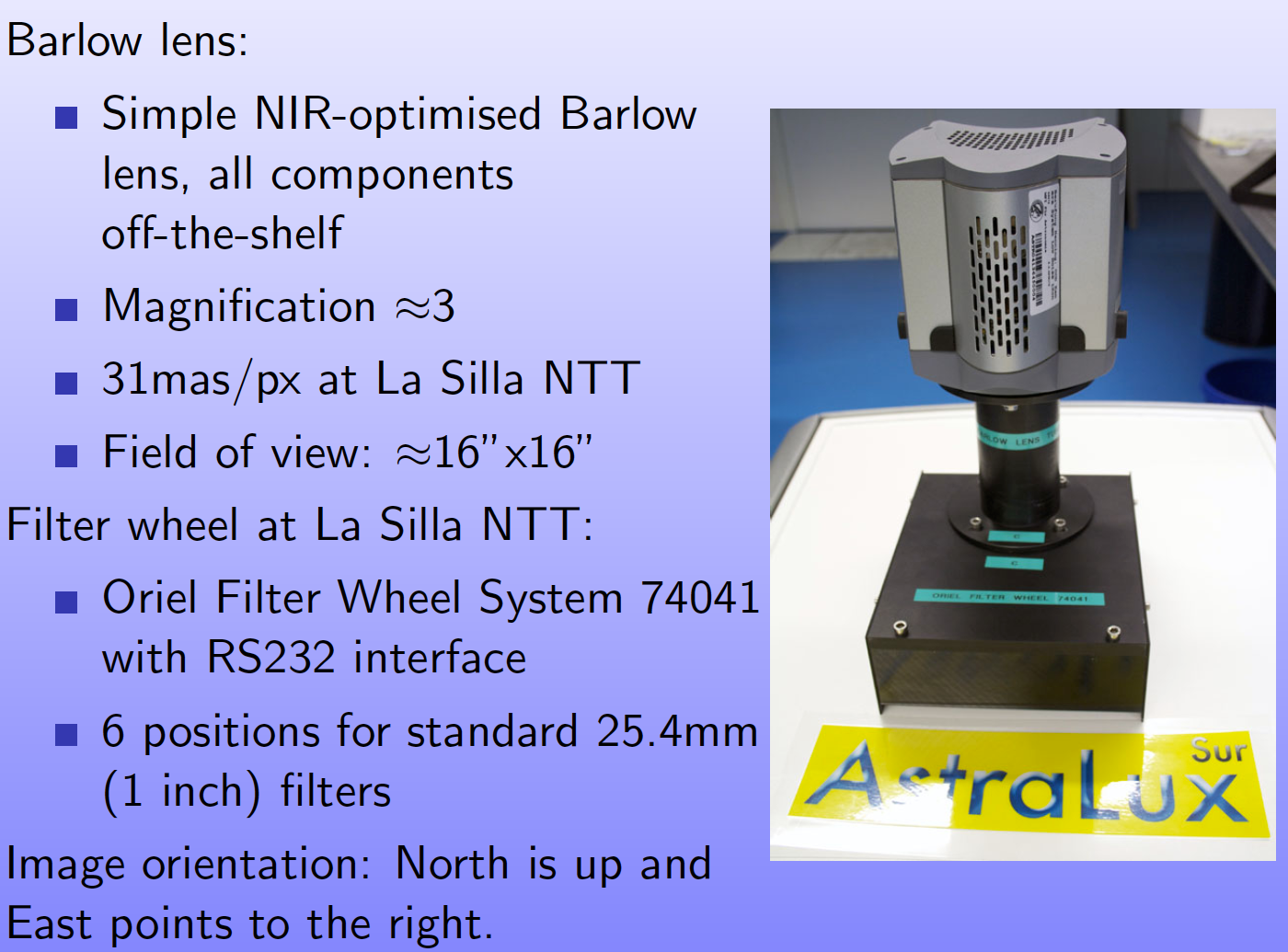
Pioneering work by Craig Mackay, Bob Tubbs et al. at the Nordic Optical Telescope (LuckyCam). AstraLux Sur is the sister instrument of AstraLux Norte, which had first light in July 2006 on the 2.2m telescope of Calar Alto observatory. |