|
|
 |
 |
 |
 |
 |
Scientific interests
|
Astrophysical jets are defined as highly collimated beams of matter moving with high velocity. It is now generally accepted that magnetic fields are responsible for both acceleration and collimation of the flow.
As a general property observed in all astrophysical jet sources,
is the signature for the existence of an accretion disk.
This holds for jets sources of different scale of energy and spatial extent: We apply numerical MHD simulations to calculate the time-dependent structure of the disk-jet magnetosphere, and the dynamics of the plasma in the formation region of magnetized jets. With jet formation we denote the accelaration and collimation of a disk wind into a jet flow, with jet launching we denote the process which lifts the accreting material into the direction vertical to the disk, producing a disk wind. Below we present (in chronological order) example results of our time-dependent MHD jet formation simulations using the ZEUS-3D code and the PLUTO code. These simulations follow the general framework of Blandford & Payne (1982) and Ouyed & Pudritz (1997). For details we refer to our published papers.
 Model scenario of a magnetised young star-disk system
(Fendt 1994, Fendt & Camenzind 1995).
Model scenario of a magnetised young star-disk system
(Fendt 1994, Fendt & Camenzind 1995).

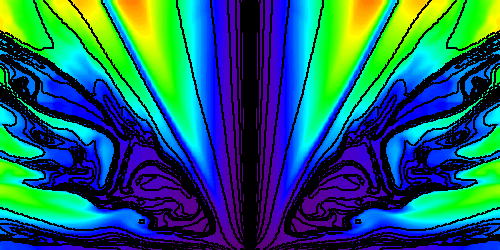
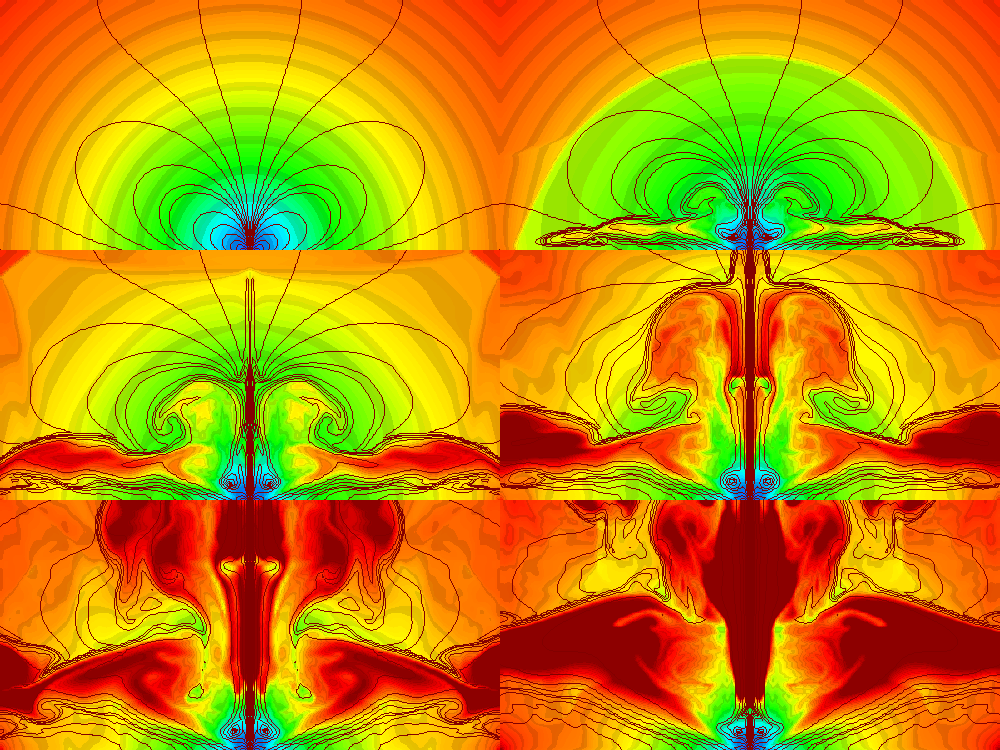
This paper investigates time-dependent evolution of a superposed
disk magnetic field with a stellar dipolar magnetosphere.
(see Fendt, 2009, 692, 346
pdf-file).
The following gif-animations show the long-term evolution of the
flow (use xanim).
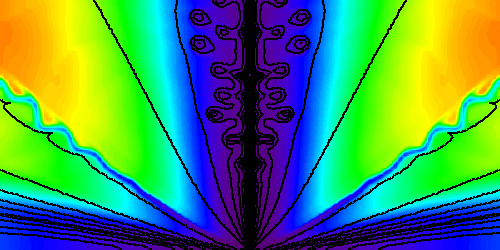
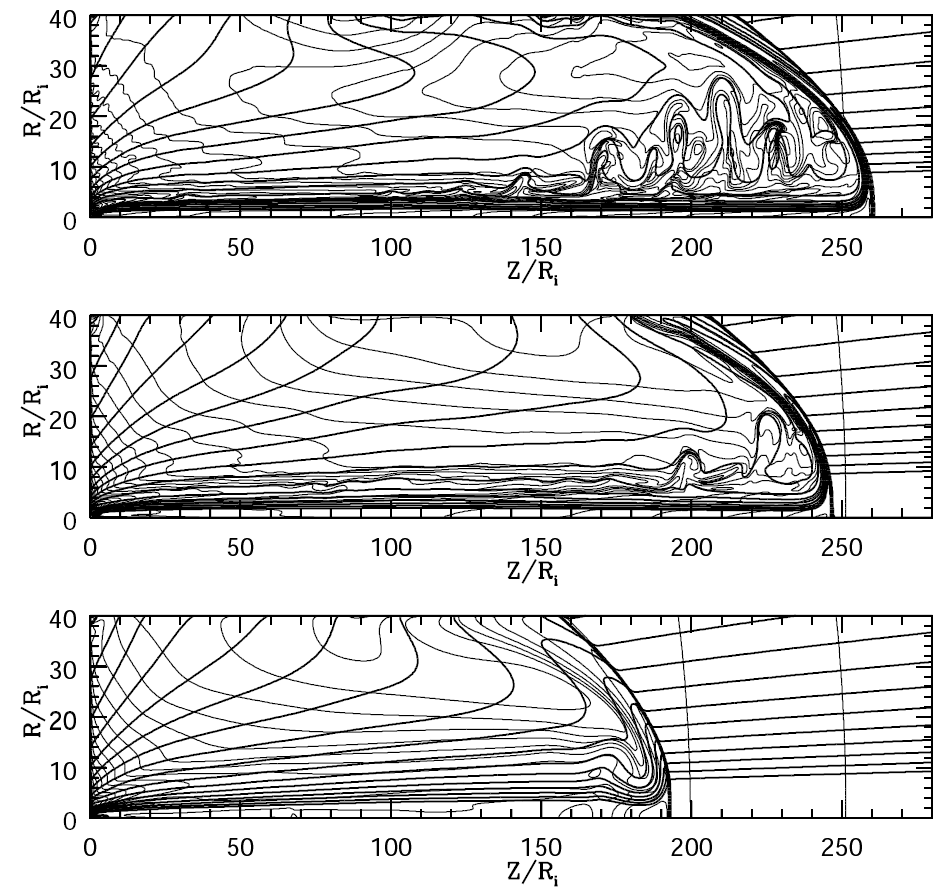
This paper investigates the interrelation between the profile
of the accretion disk magnetic field profile (and the disk
wind density profile) and the degree of jet collimation.
(see Fendt, 2006, ApJ 651, 272,
pdf-file).
In another paper we investigated the relation between the magnitude of
jet magnetic diffusivity and the degree of jet collimation.
(see Fendt & Cemeljic, 2002, A&A 395, 1045,
pdf-file).
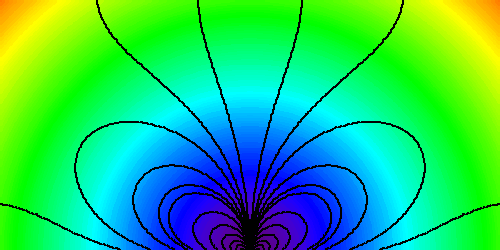
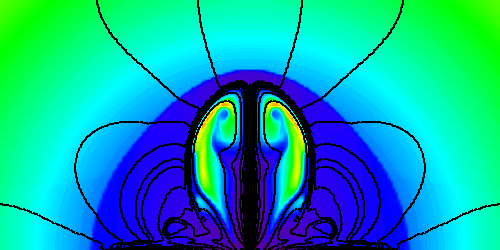
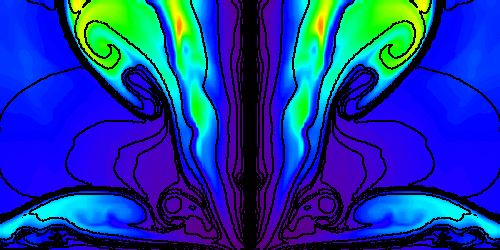
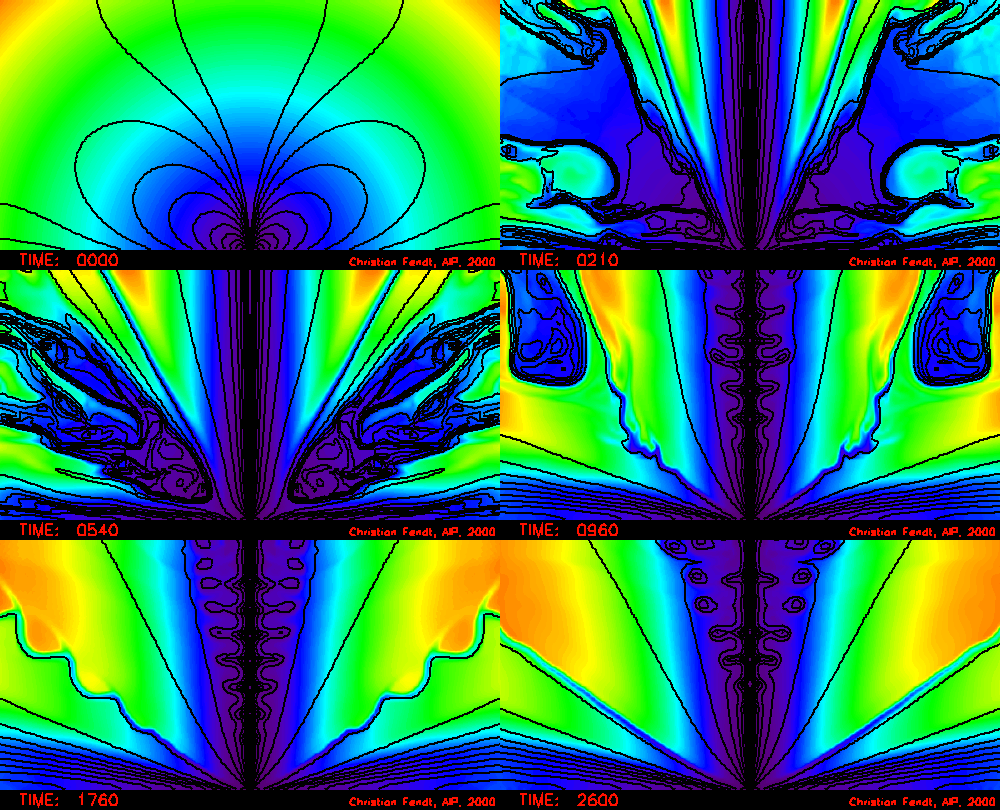
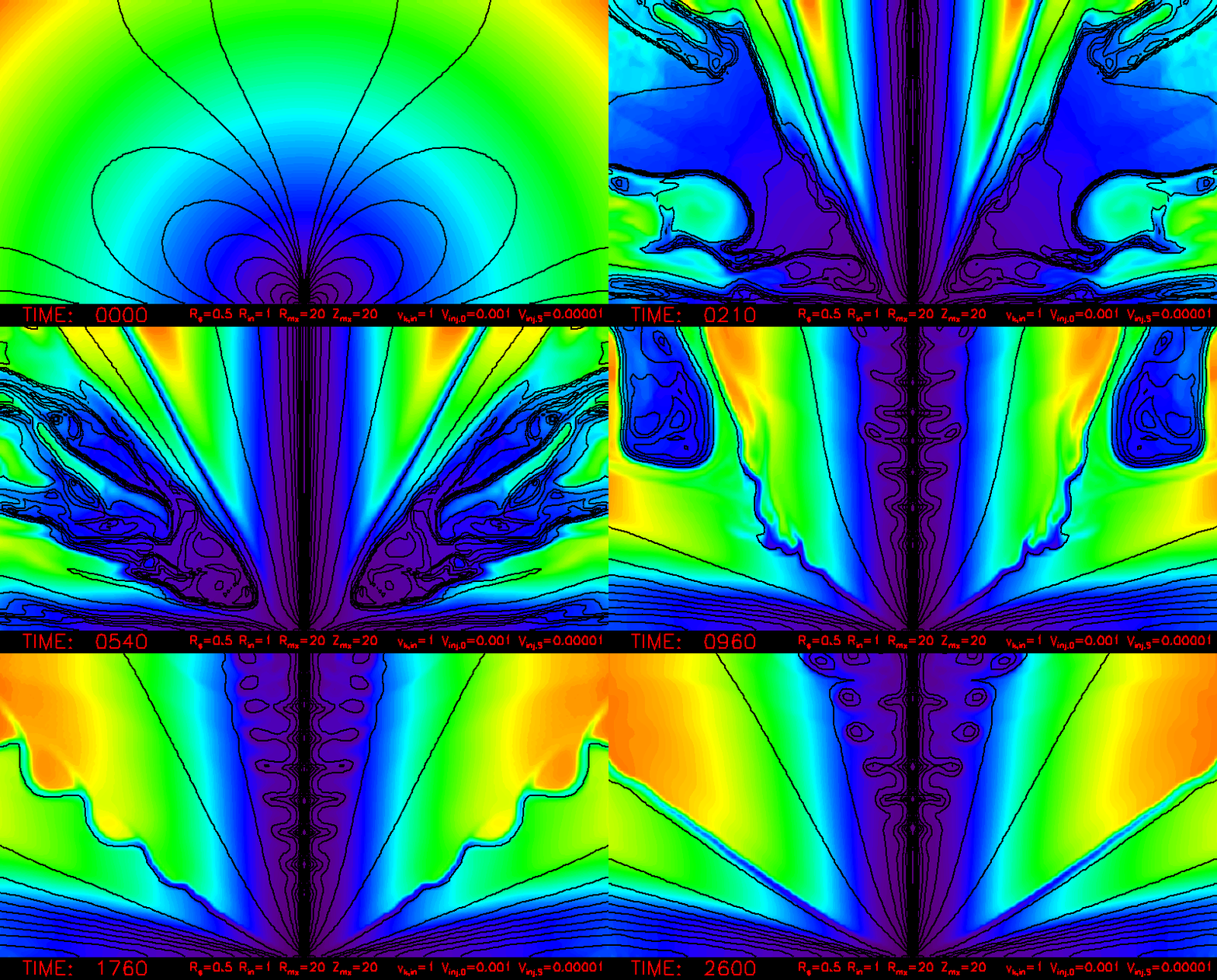
Using the ZEUS 3D code in the axisymmetry option the evolution of a stellar dipolar-type
magnetic field interacting with an accretion disk is calculated. The boundary condition
is an inflow from a Keplerian disk (as in Ouyed and Pudritz 1997).
In the movies the accretion disk is at the lower boundary.
The initial magnetic field is locked in a rigidly rotating stellar surface
and the disk. The size of the domain is 20x20 inner disk radii.
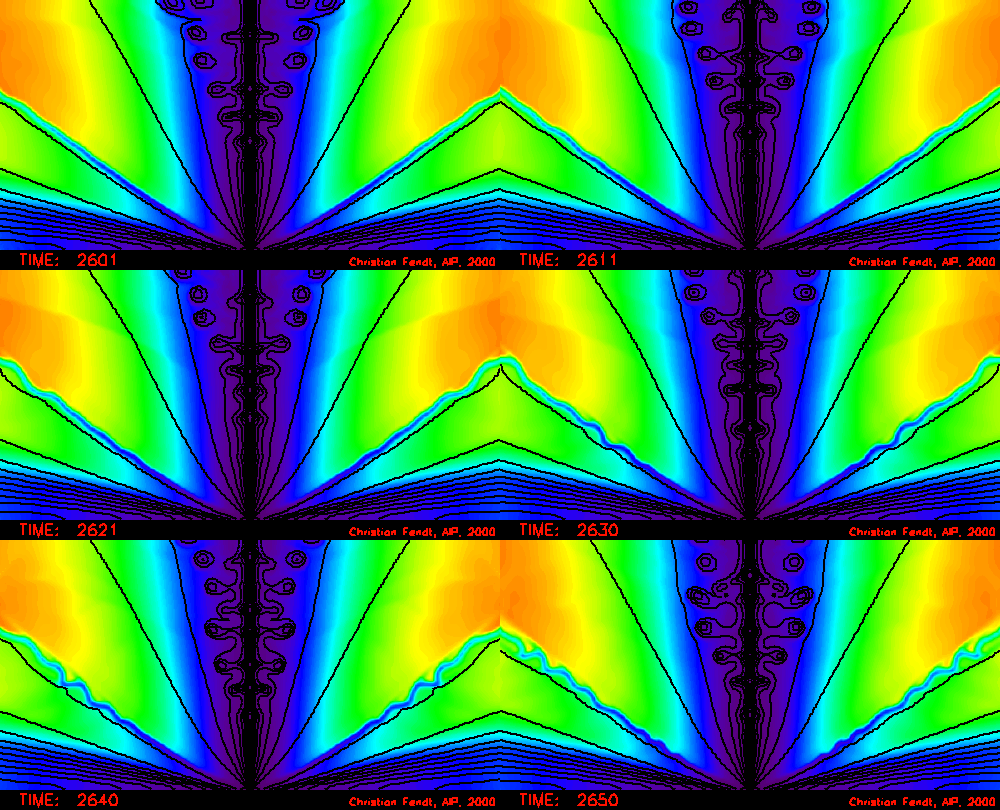
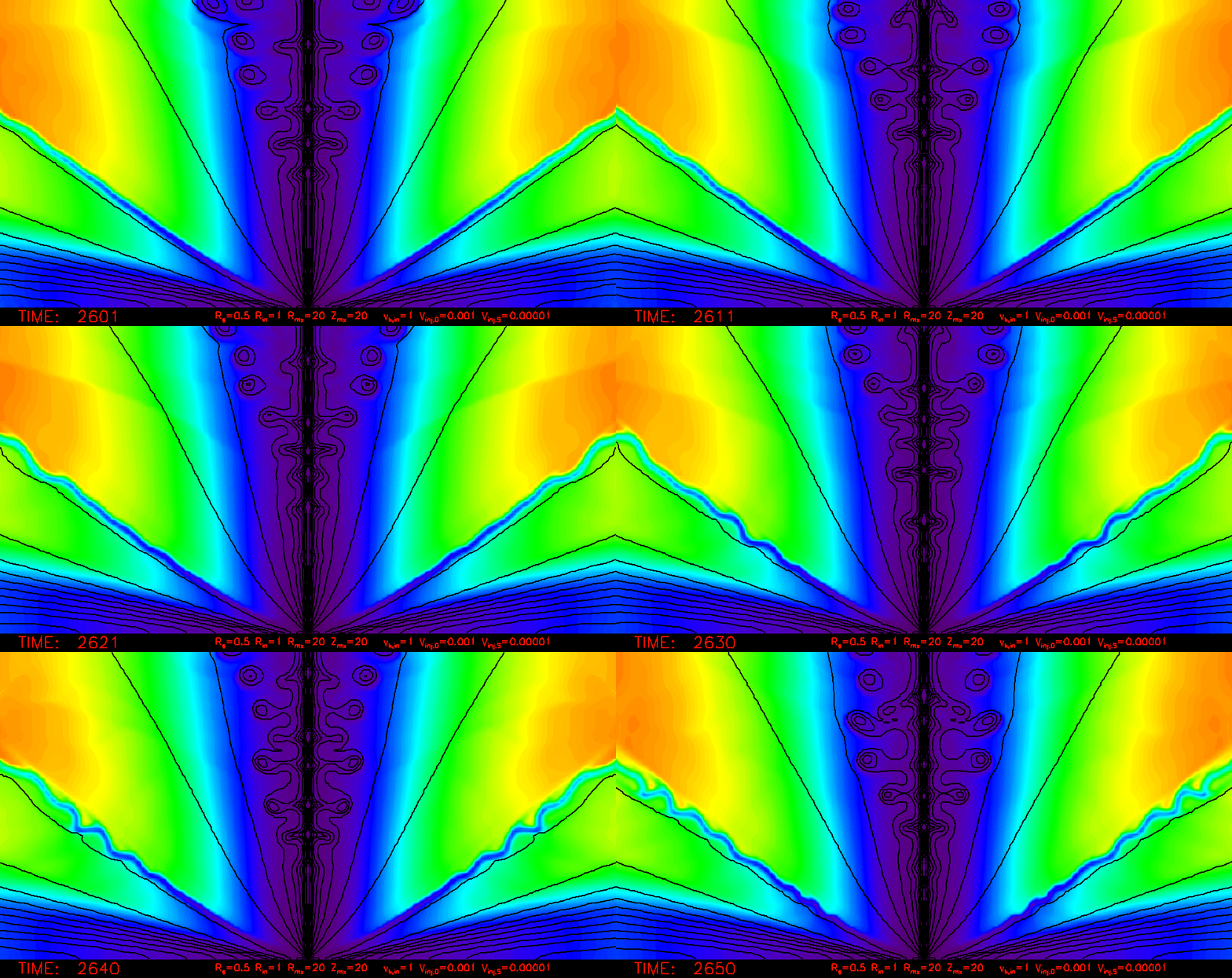
Shown are density (colors) and poloidal field lines (black).
In the second example the star rotates with a corotation radius at the inner disk radius. The initial field structure is a force-free dipole quenched along the equatorial plane. A two-component outflow (disk wind and stellar wind) is formed which is uncollimated. More than 2500 Keplerian periods of the inner disk are calculated in order to obtain a quasi-stationary final state (run S2). A larger stellar wind mass flow rate stabilizes the flow along the axis (run L5) (see Fendt & Elstner, 2000, A&A 363, 208 pdf-file). The following gif-animations show the long-term evolution of the flow (use xanim).
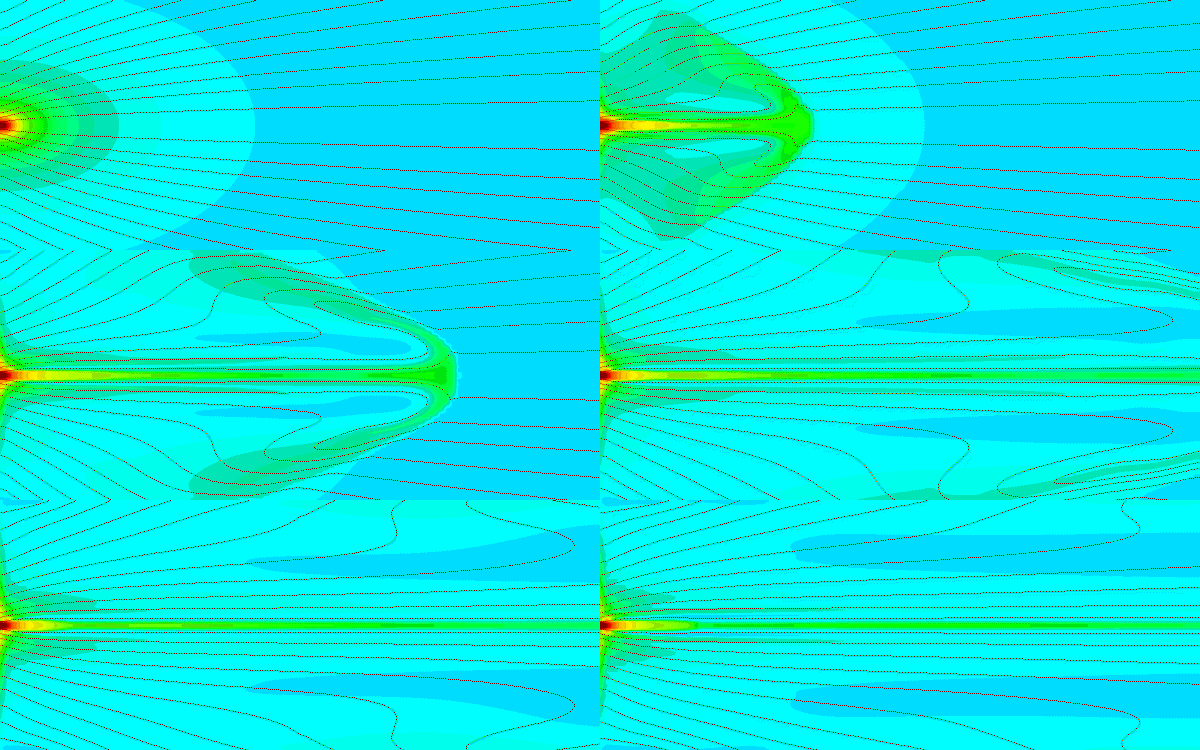
Using the ZEUS-3D code in the axisymmetry option we calculated the jet formation from an accretion disk into a hydrostatic disk corona. The model of Ouyed and Pudritz (1997) is applied and used as reference for further simulations, e.g. of dipolar-type magnetic fields interacting with an accretion disk (below).
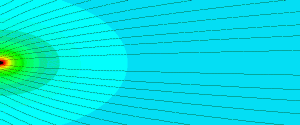
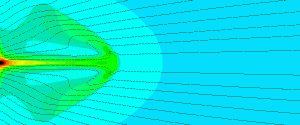

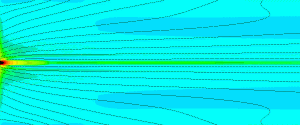
The jet runs from left (accretion disk) to the right (hydrostatic corona). Shown are density (colors) and poloidal field lines (black). The jet ACCELERATES and COLLIMATES. |

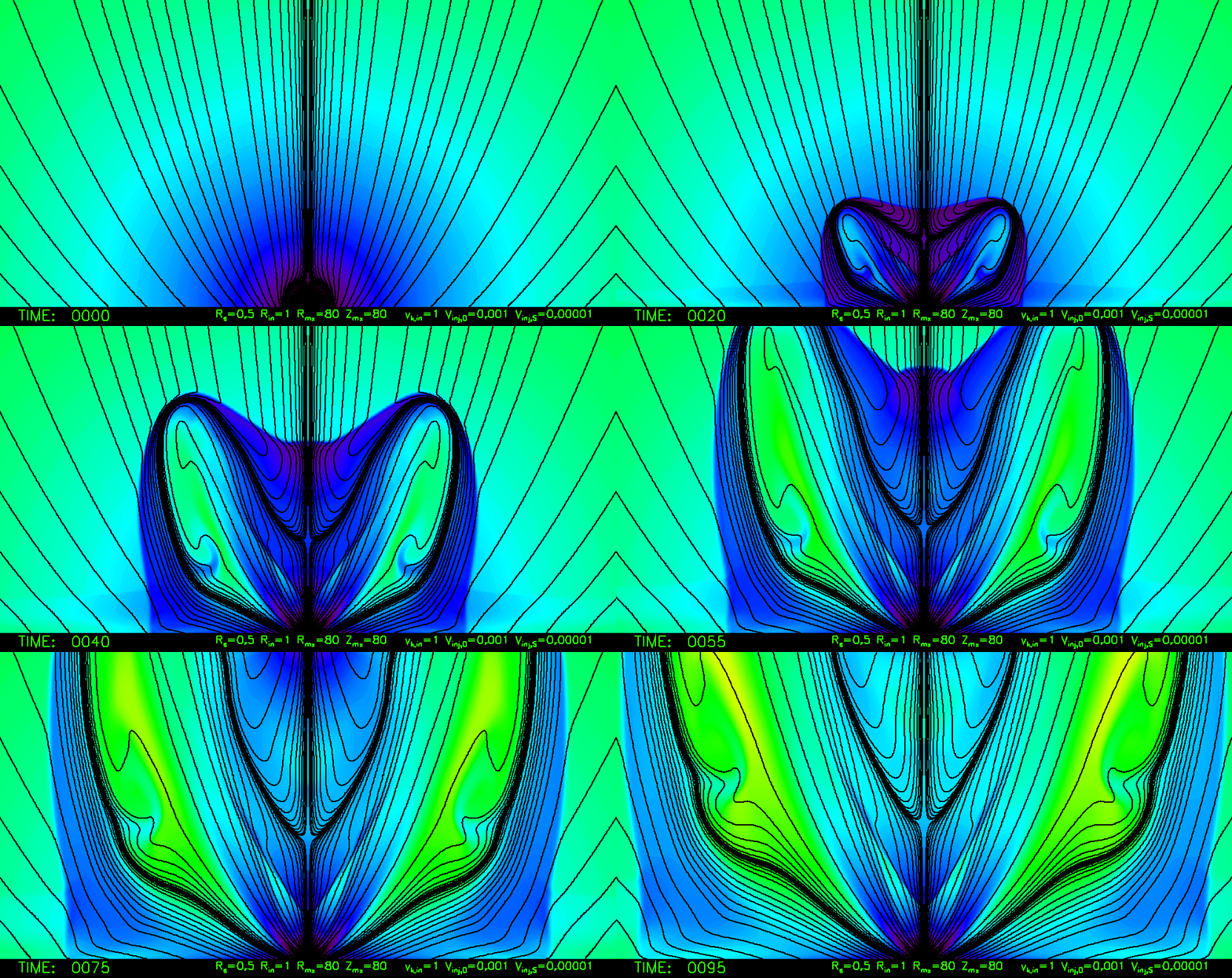 Large frames, initial time steps (~3MB)
 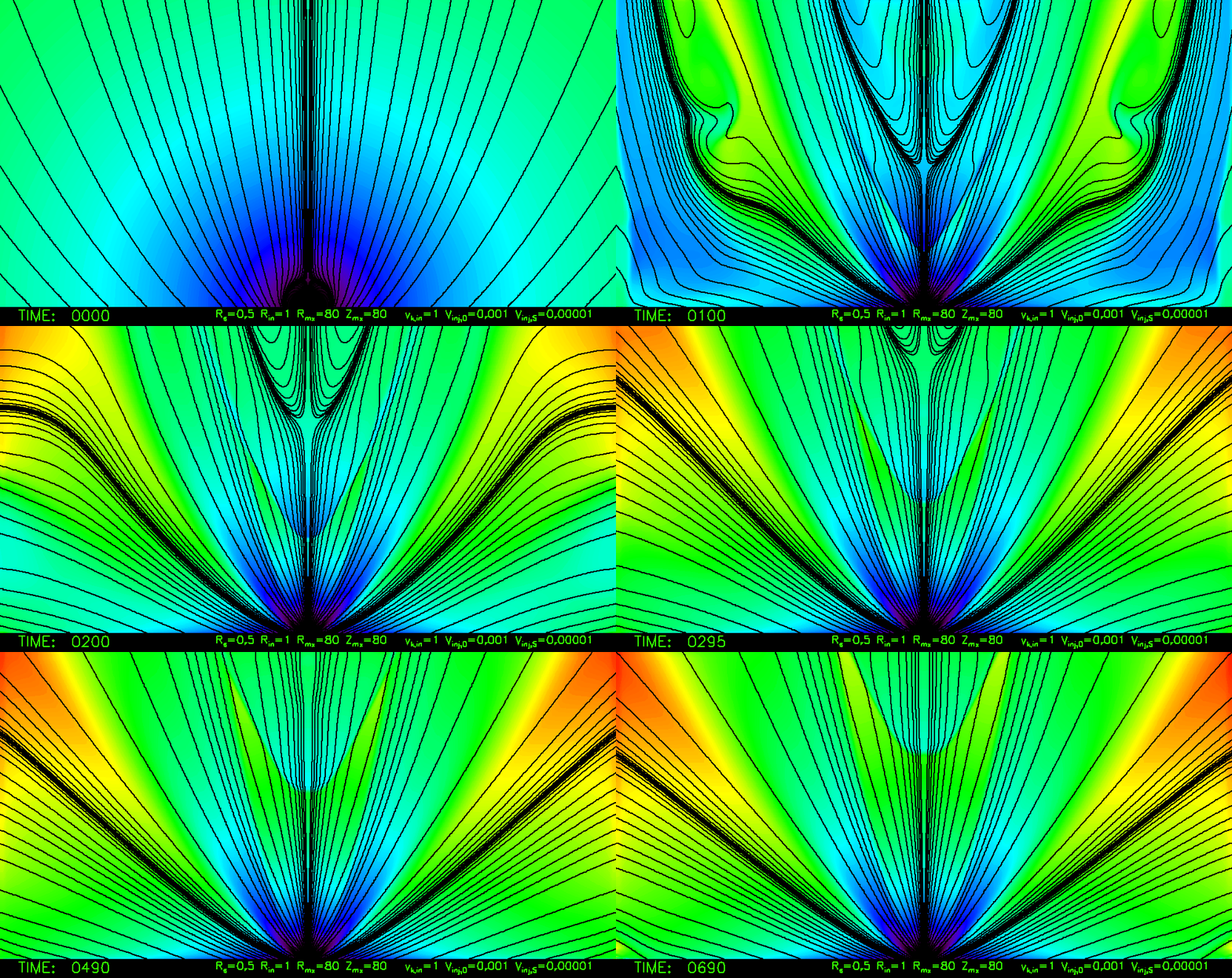 Medium size frames, long run (~15MB)
  Fewer frames, long run (~34MB)
  Large frames, long run (~35MB)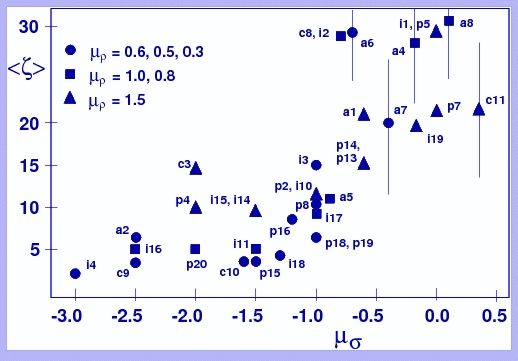
 Dipolar field, star at rest (~2MB)
  Small frames, long run (~11MB)
 Small frames, final time steps (~3MB)
 Large frames, final time steps (~9MB)
  Medium size frames, long run (~25MB)
  Large frames, long run (~35MB)